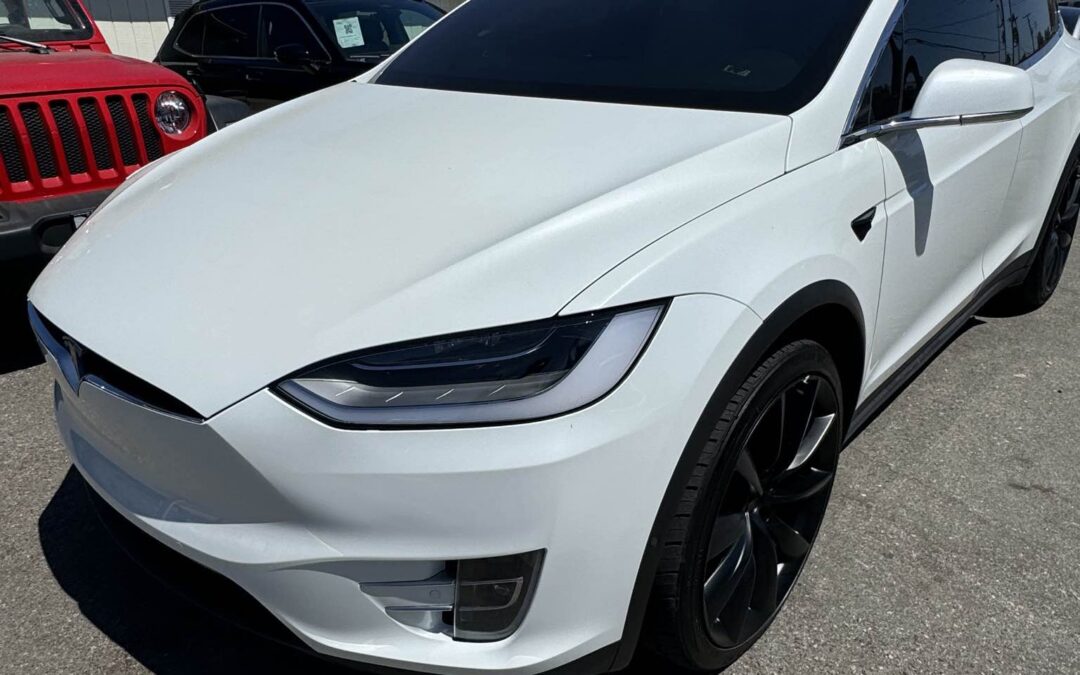
Tesla Model Y collision repair involves more than addressing the damage you can see after an accident. Depending on the impact, technicians may need to inspect exterior panels, underlying components, structural areas, electrical systems, and other vehicle technology before they develop the appropriate repair plan.
Quick Answer: What should Tesla Model Y owners know about collision repair? Tesla Model Y collision repair should follow the procedures that apply to the vehicle year, damaged components, and extent of the collision. Tesla publishes Model Y-specific procedures that guide technicians through body structures, structural components, electrical systems, restraint systems, tools, materials, fasteners, and other repair operations. Premier Coach Auto Collision operates as a Tesla Approved Collision Center in Thousand Oaks and has real-world experience repairing Tesla Model Y vehicles after collisions.
After an accident, Model Y owners often have several questions.
Is the damage only cosmetic? Did the impact affect components behind the visible body panels? Can technicians repair the damaged component, or does Tesla require replacement? Do the vehicle’s cameras or other systems require additional attention?
The answers depend on the specific vehicle, damage, and repair requirements.
Tesla provides detailed collision repair documentation for the Model Y, including separate procedures for 2020–2024 and 2025+ vehicles. These resources cover structural repair guidelines, dimensional specifications, fasteners, chemicals, repair equipment, body components, electrical harnesses, and restraint-system inspections.
What Makes Tesla Model Y Collision Repair Different?
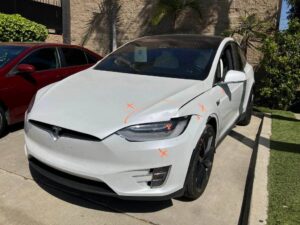
Modern Tesla Model Y collision repair involves much more than restoring the appearance of damaged exterior panels.
The Model Y combines body structures, electrical systems, restraint components, glass, exterior panels, high-voltage systems, and integrated vehicle technology. Therefore, technicians must evaluate the specific areas involved in a collision instead of relying only on visible damage.
Tesla’s Model Y Collision Repair Procedures reflect that complexity.
For 2020–2024 Model Y vehicles, Tesla provides repair information covering areas such as:
- Body structure materials and allowed operations
- Dimensional specifications
- Structural repair guidelines
- Electrical harness repair
- SRS inspection and component replacement
- Tesla-approved fasteners and fastening tools
- Chemicals approved for applicable repairs
- Welding equipment specified by Tesla
- Frame benches and electronic measuring systems
- Body panels and structural components
- Plastic component repair
- Glass installation
- Underbody components
Tesla also provides separate collision repair documentation for 2025+ Model Y vehicles.
As a result, technicians cannot determine the appropriate repair simply because the vehicle is a Model Y. They must also consider the model year, location and extent of the damage, affected components, and Tesla procedures that apply to the specific repair.
Technicians also need to identify the vehicle configuration, model year, location of the damage, components involved, and applicable Tesla repair procedures.
What Happens After a Tesla Model Y Is in an Accident?
The Tesla Model Y collision repair process starts with an inspection of the vehicle and the areas involved in the impact.
Visible damage provides the first clues. For example, technicians may identify damage to the bumper cover, fender, door, liftgate, hood, wheel, or other exterior components.
However, visible damage does not always reveal the full repair scope. Exterior panels and trim can limit access to components behind them, so technicians may need to remove certain parts before they can inspect those areas thoroughly.
After the initial assessment, technicians can gather more information and develop a detailed repair plan based on what they find.
Because every collision is different, Model Y repairs do not follow one universal set of operations. Instead, technicians consider the vehicle year, location and extent of the damage, components involved, and applicable Tesla repair procedures before determining the repair requirements.
Step 1: Initial Damage Assessment
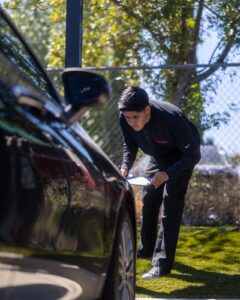 The initial assessment helps technicians begin defining the repair scope.
However, an initial estimate and a complete repair plan serve different purposes. Technicians may not have access to every component while the vehicle remains fully assembled.
That is where disassembly can provide a clearer picture of the damage.
Step 2: Disassembly Can Reveal Additional Damage
During Tesla Model Y collision repair, exterior panels and other components can sometimes conceal damage underneath or behind them.
Technicians may remove necessary trim, panels, liners, bumper components, or other parts to gain better access to the collision area. This process can reveal damage that the initial exterior inspection could not identify.
Finding additional damage does not necessarily mean someone overlooked it during the first inspection. In many cases, exterior components simply prevent technicians from seeing the areas behind them until disassembly begins.
For Model Y owners, this helps explain why technicians may expand or adjust the repair plan after gaining access to the damaged area.
Tesla’s repair documentation recognizes that repair requirements depend on the damage technicians find. Individual procedures may also identify additional repairs based on the vehicle’s condition.
After completing a more thorough inspection, the repair team can identify the Tesla procedures that apply before moving forward.
Step 3: Determine What Technicians Can Repair and What Requires Replacement
Tesla Model Y collision repair does not follow a universal rule that technicians should repair every damaged component or replace every damaged part.
Instead, technicians consider the component, type and extent of damage, and applicable Tesla procedures.
Tesla publishes Part Repairability Guidelines that identify repairability considerations for specific components. These guidelines help technicians determine when a repair may be appropriate and when the applicable Tesla procedure calls for replacement.
Tesla also provides guidance for plastic components. Depending on the component and location of the damage, technicians may repair certain non-safety-related plastic parts using appropriate methods. Tesla places restrictions on repairs to specific components and areas.
As a result, two Model Y vehicles with similar-looking exterior damage may require different repair operations.
The repair team must develop the repair plan around the actual damage, affected components, and applicable Tesla procedures for that specific vehicle.
Step 4: Follow the Applicable Tesla Collision Repair Procedure
For Tesla Model Y collision repair, technicians need to identify the Tesla procedures that apply to the damaged components and planned repair operations.
When structural work is necessary, Tesla instructs repairers to review the specific Tesla Collision Repair Procedure before beginning the repair.
Tesla’s structural repair documentation generally organizes component replacement into four stages:
- Remove the damaged component
- Prepare the vehicle for installation
- Secure the replacement component
- Apply corrosion protection and seam sealer
The exact operations vary by component.
Rather than relying on one generic structural repair method, Tesla provides individual Model Y procedures for numerous areas of the vehicle.
For owners, the takeaway is straightforward:
Technicians should base the repair method on the applicable Tesla procedure and the actual damage they find on the vehicle.
Tesla Model Y Repair Procedures Continue to Evolve
Current repair information matters because Tesla can update its collision repair procedures as repair information evolves.
Tesla continues to revise its Model Y Collision Repair Procedures. For example, the change log for the 2020–2024 Model Y manual documents updates involving repair steps, images, fasteners, and other technical information.
Tesla has also updated the 2025+ Model Y manual with changes to repair procedures, chemicals, equipment information, and other technical documentation.
Therefore, technicians performing Tesla Model Y collision repair should use current repair information rather than rely solely on methods used for a similar vehicle several years ago.
Current manufacturer information helps the repair team identify the procedures that apply to the specific Model Y and repair operation.
Model Y Body and Structural Damage
Not every Model Y collision damages the vehicle’s structural components. However, when an impact reaches structural areas, technicians need to plan the repair around the specific components involved.
Tesla provides Model Y structural repair guidelines, dimensional specifications, fastening information, welding requirements, measuring-system information, and component-specific replacement procedures.
For example, the 2025+ Model Y documentation contains individual procedures for structural components, and the requirements vary according to the component and repair.
These differences show why technicians must make structural repair decisions on a component-by-component basis.
Instead of applying the same repair method to every damaged area, technicians evaluate the location and extent of the damage and identify the procedures, equipment, fasteners, materials, and measurements that apply.
What About Model Y Bumper Damage?
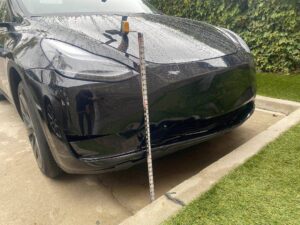 Bumpers are among the most visible areas after many collisions, but the bumper cover is only one part of the repair assessment.
Technicians may need to inspect the damaged area and adjacent components to determine the complete scope.
Tesla publishes specific repair guidance for plastic components and bumper fascia, including limitations on repairs in certain areas.
However, whether a particular Model Y bumper should be repaired or replaced depends on the actual damage and applicable procedure.
Because Tesla bumper repair involves its own set of questions—including hidden components, repair versus replacement, and vehicle technology—this topic deserves separate, more detailed coverage.
For the Model Y collision process as a whole, the important point is that visible bumper damage does not necessarily define the complete repair scope.
What About Cameras, Sensors and Driver-Assistance Systems?
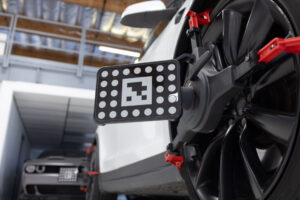 A Model Y contains electronic systems that may also need consideration during collision repair.
However, it would be inaccurate to say that every Model Y accident automatically requires the same calibration or diagnostic operations.
Requirements depend on factors such as:
- Where the vehicle was damaged
- Which components were removed or replaced
- Which repair operations were performed
- What Tesla’s applicable procedures require
For that reason, the repair plan needs to account for the specific vehicle and work being performed.
Tesla ADAS calibration after a collision is a separate technical subject that deserves its own detailed explanation. For Model Y owners, the key takeaway here is simply that collision repair should consider more than exterior appearance.
Paint and Refinishing After Model Y Collision Repair
Once body repairs are complete, refinishing helps restore the appearance and protect repaired surfaces.
The process can involve surface preparation, color evaluation, application of refinishing materials, clear coat, curing, finishing, and inspection.
Tesla’s Model Y collision documentation includes information about approved paint systems for Tesla warranty repairs as part of its approved parts, tools, and supplies resources.
The exact refinishing process depends on the panels involved and repair being performed.
At Premier Coach, collision refinishing is approached as part of the overall repair rather than simply as a cosmetic final step. Panel appearance, finish quality, and repaired areas need to work together when the vehicle is reassembled.
Why Approved Parts, Fasteners and Repair Materials Matter
A structural repair can involve more than the replacement panel itself.
Fasteners, adhesives, corrosion-protection materials, and other repair products can also be part of the procedure.
Tesla states in its Model Y repair guidelines that structural collision repairs are developed and tested using OEM parts and Tesla-approved fasteners. Tesla also specifies approved chemicals for applicable repairs.
Read: What is an OEM Certified Collision Repair Shop?
Tesla’s documentation includes separate resources for:
- Approved fasteners
- Fastener tools
- Structural adhesives
- Chemicals
- Welding equipment
- Measuring systems
- Other repair equipment
For owners, these details illustrate why manufacturer repair documentation goes much deeper than simply identifying which exterior panel was damaged.
What Is a Tesla Approved Collision Center?
 Tesla distinguishes between its own collision facilities and independently operated repair facilities.
According to Tesla, Tesla Collision Centers are owned, trained, and operated by Tesla.
By comparison, Tesla Approved Collision Centers are independently owned and operated facilities provided with Tesla training and tooling.
Becoming a Tesla Approved Collision Center involves more than displaying a Tesla logo.
Tesla says applicants are evaluated based on whether they meet its facility, equipment, and operating standards. Once a facility meets Tesla’s tooling and training requirements, it can be listed as a Tesla Approved Collision Center.
Tesla describes the mission of its collision program as providing repair facilities with the training, procedures, parts, and tools needed to return Tesla vehicles to their originally engineered state of safety, performance, and aesthetics.
Tesla’s training requirements also include role-specific education. Current requirements include courses covering electrical fundamentals, structural anatomy, high-voltage disablement, vehicle familiarization, and other areas depending on an employee’s role.
Premier Coach Is a Tesla Approved Collision Center in Thousand Oaks
Premier Coach Auto Collision’s Thousand Oaks facility is a Tesla Approved Collision Center (TACC).
For Model Y owners, that distinction provides an important way to verify that the collision facility participates in Tesla’s official repair program rather than simply advertising that it works on Tesla vehicles.
Tesla’s program requires approved facilities to satisfy applicable training and tooling requirements and meet facility, equipment, and operating standards before being listed as a Tesla Approved Collision Center.
Premier Coach combines that Tesla approval with more than 30 years of collision repair experience.
For a Model Y collision repair, our team can use the applicable Tesla repair information to develop the repair plan around the vehicle’s year, damaged components, and repair requirements.
That distinction is particularly relevant because Tesla maintains different collision repair documentation for 2020–2024 Model Y vehicles and 2025+ Model Y vehicles, while continuing to update its procedures.
Premier Coach also assists vehicle owners throughout the insurance repair process by helping document collision damage and communicating repair information as the repair progresses.
Ultimately, being a Tesla Approved Collision Center is not the entire story.
The value lies in what stands behind the designation: training, tooling, access to Tesla repair information, and procedures developed specifically for Tesla vehicles.
Real Tesla Model Y Repair Experiences at Premier Coach
Tesla approval helps establish the standards behind a collision repair facility. Customer experiences provide another important form of proof: Model Y owners who have actually brought their vehicles to Premier Coach after a collision.
Tesla Model Y Front-End Collision Repair
Sandra Peng brought her Tesla Model Y to Premier Coach after a front-end collision caused by hydroplaning on the freeway.
She wrote:
“Premier did a great job repairing my Tesla Model Y when I got into a front-end collision earlier this year after hydroplaning on the freeway.”
Sandra explained that the repair process also involved communication between Premier Coach and her insurance company regarding the initial and supplemental estimates. She specifically highlighted Ray’s communication during the insurance process and the regular repair updates she received from Kevin once work was underway.
She ultimately said she would highly recommend Premier Coach to others needing a Tesla collision repair facility.
Read Sandra Peng’s full review on Google →
2022 Tesla Model Y Repair
Joby Maliyil also shared his experience after Premier Coach worked on his 2022 Tesla Model Y:
“They did a great job on my 2022 Model Y. Always updated on the progress.”
His feedback highlights a straightforward but important part of the repair experience: keeping the vehicle owner informed while repairs are underway.
Read Joby Maliyil’s full review on Google →
Tesla Model Y Auto Body Repair and Insurance Coordination
Pravin Patel also brought his Tesla Model Y to Premier Coach for auto body repair.
He wrote:
“Excellent auto body repair…my Tesla Model Y looks great.”
Pravin also praised Premier Coach’s front-office and shop staff and mentioned the team’s work coordinating the insurance settlement.
Read Pravin Patel’s full review on Google →
Together, these reviews provide first-hand examples of Model Y owners choosing Premier Coach for Tesla collision and auto body repair.
The customer reviews featured above appear on our Google Business Profile and represent publicly available customer feedback.
From Repair Planning to Final Inspection
After technicians complete the necessary repairs, they move the vehicle through reassembly and final checks.
The exact finalization process depends on the repairs performed. During this stage of Tesla Model Y collision repair, the repair team may check:
- Panel fit and alignment
- Exterior finish
- Reinstalled components
- Vehicle functions related to the repair
- Applicable post-repair operations
- Overall repair quality
The goal goes beyond making visible collision damage disappear.
Tesla describes collision repair as important to the vehicle’s functionality, safety, and longevity, with the broader objective of restoring safety, systems performance, fit, and aesthetics.
Therefore, every stage of the repair matters, from the initial inspection and repair planning through reassembly and final checks.
Tesla Model Y Collision Repair FAQs
Does a Tesla Model Y have to go to a Tesla-owned Collision Center after an accident?
Not necessarily. Tesla distinguishes between Tesla-owned Collision Centers and independently operated Tesla Approved Collision Centers.
According to Tesla, independently owned and operated Tesla Approved Collision Centers receive Tesla training and tooling.
Premier Coach Auto Collision in Thousand Oaks operates as a Tesla Approved Collision Center, giving Model Y owners another option when they need Tesla Model Y collision repair after an accident.
Does Tesla publish specific collision repair procedures for the Model Y?
Yes.
Tesla publishes detailed Model Y Collision Repair Procedures that address structural repairs, body components, repairability guidelines, electrical systems, SRS inspection, tools, fasteners, chemicals, measuring equipment, and other repair information.
Tesla also provides separate documentation for 2020–2024 and 2025+ Model Y vehicles.
These model-specific resources help technicians identify the procedures that apply to each Tesla Model Y collision repair.
Can Model Y collision damage be worse than it looks?
Yes, technicians may discover additional damage after removing exterior components.
During the initial inspection, body panels, trim, liners, and other components can prevent technicians from seeing every area involved in the collision. Disassembly gives the repair team greater access to inspect those areas and develop a more complete repair plan.
However, that does not mean every Model Y accident causes hidden or structural damage. Technicians should determine the repair scope from the damage they actually find during inspection.
Can technicians always repair a damaged Tesla Model Y part instead of replacing it?
No.
The component, location and extent of the damage, and applicable Tesla repair guidance determine whether technicians can repair a part or need to replace it.
Tesla publishes Part Repairability Guidelines that help collision repairers determine the appropriate approach for specific components.
Therefore, technicians performing Tesla Model Y collision repair should make repair-versus-replacement decisions based on the vehicle’s actual damage and applicable Tesla guidance.
Does every Model Y collision require ADAS calibration?
Not necessarily.
The damage, affected components, repair operations, and applicable Tesla procedures determine which diagnostic, calibration, or related operations technicians need to perform.
Because each collision differs, technicians should identify the requirements for the specific vehicle rather than assume every Model Y needs the same post-repair operations.
Are 2025+ Model Y collision repairs the same as earlier Model Y repairs?
Not necessarily.
Tesla maintains separate collision repair documentation for 2020–2024 Model Y vehicles and 2025+ Model Y vehicles.
Therefore, technicians should identify the procedures for the specific model year, damaged components, and repair operation before beginning the applicable work.
How do I know whether a collision shop is Tesla Approved?
Tesla provides information about its Approved Collision Center program and the requirements participating facilities must meet.
Instead of relying only on a Tesla logo displayed on a shop’s website or advertising, owners can verify whether a facility participates in Tesla’s official collision repair program.
Premier Coach’s Thousand Oaks facility participates in the Tesla Approved Collision Center program.
How do I choose a shop for Tesla Model Y collision repair?
When choosing a facility for Tesla Model Y collision repair, start by checking whether the shop participates in Tesla’s Approved Collision Center program.
You can also consider the facility’s Model Y repair experience, access to current Tesla repair information, equipment, communication process, and experience working with collision claims.
Premier Coach Auto Collision’s Thousand Oaks facility is a Tesla Approved Collision Center with real-world Model Y collision repair experience.
Tesla Model Y Collision Repair in Thousand Oaks
If you need Tesla Model Y collision repair in Thousand Oaks, start by having the vehicle inspected so technicians can identify the damage and determine which repair procedures apply.
Premier Coach Auto Collision operates as a Tesla Approved Collision Center in Thousand Oaks with more than 30 years of collision repair experience and real-world experience repairing Model Y vehicles after accidents.
Our team approaches Tesla Model Y collision repair as a complete process. From initial inspection and repair planning through body repair, refinishing, reassembly, and final checks, technicians consider the vehicle, collision damage, affected components, and applicable Tesla procedures.
For Model Y owners, the repair process starts with three things:
The specific vehicle, the actual collision damage, and the applicable Tesla repair procedures.
Sources
1. Tesla — Collision Support
2. Tesla — 2020–2024 Model Y Collision Repair Procedures
3. Tesla — Tesla Approved Collision Centers